For Chimney & Fireplace Repair Near You in Durham, Trust Mr. Smokestack
Are you in the Durham, NC area? Your chimney and fireplace deserve expert attention, and that’s exactly what you’ll get with Mr. Smokestack. Whether you’re dealing with cracked masonry, a damaged chimney cap, a leaky flue, or a malfunctioning fireplace, our experienced team is here to help with quality fireplace repair services near you. Schedule with us soon.
Can Creosote in My Chimney Cause Damage?
Definitely. Not only is creosote flammable, but creosote buildup in your chimney can break things down and invite other issues. Things like…
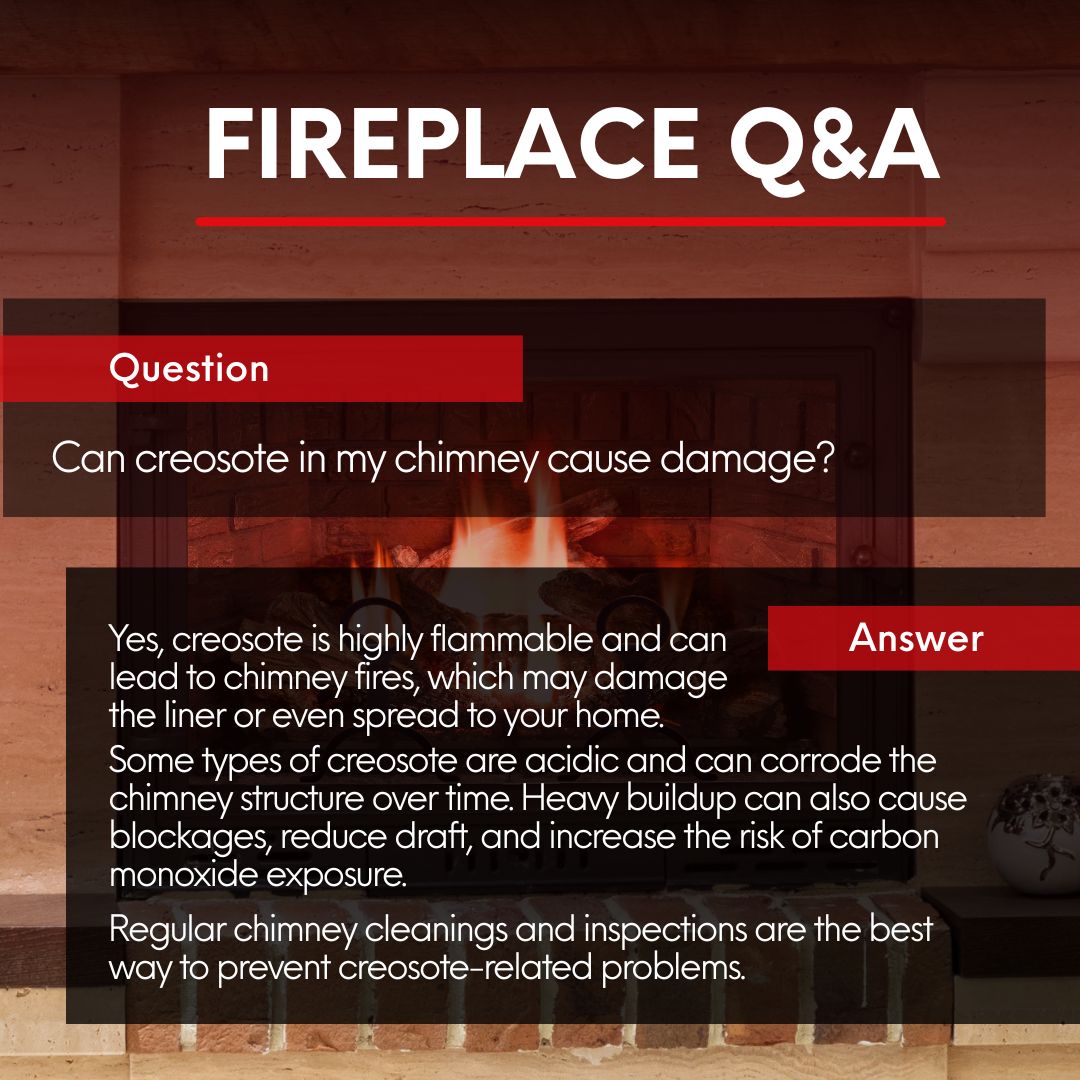
- Chimney Fires: Creosote is highly flammable. Even a small amount can ignite and lead to a chimney fire, which can severely damage your chimney liner…and even spread to your home.
- Corrosion & Structural Damage: Some forms of creosote are acidic. Over time, they can eat away at your chimney liner and masonry, weakening the structure and leading to costly repairs.
- Blockages & Draft Problems: Thick creosote deposits can narrow the flue, making it harder for smoke and gases to escape. This can lead to poor draft, backdrafting, or dangerous carbon monoxide exposure inside your home.
- Chimney Smells: In warm or humid weather (especially if you have your A/C cranked up), creosote deposits can emit strong, unpleasant odors that seep into your home.
To prevent damage, schedule regular chimney inspections and cleanings, especially if you use your fireplace frequently. A professional sweep will remove creosote and check for any signs of wear or fire risk.
Is It Safe to Use a Damaged Chimney?
Using a damaged chimney is never recommended, as it can pose serious safety risks, as well as increase the likelihood of experiencing home damage. What issues could you face?
- Fire Hazards: Cracked flue liners, damaged masonry, or heavy creosote buildup can allow flames or sparks to reach surrounding wood framing.
- Carbon Monoxide Risks: A blocked or damaged flue can cause smoke and toxic gases to back up into your living space.
- Structural Instability: If bricks or mortar are loose or crumbling, parts of your chimney could collapse or deteriorate further with continued use.
- Moisture Intrusion: Moisture can cause rust, mold, and further deterioration, weakening your chimney from the inside out.
- More Expensive Issues: Continuing to use a compromised chimney can quickly turn small repairs into large, expensive restorations.
If your chimney shows any signs of damage, like cracks, smoke entering your home, strange odors, or any visible deterioration, it’s safest to stop using it until a professional inspection (and any needed subsequent repairs) can be completed.
Can Chimney Damage Affect My Home’s Energy Efficiency?
Yes, chimney damage can significantly impact your home’s energy performance…and often in ways homeowners don’t immediately realize.
For instance, when dampers or masonry are damaged, they can allow conditioned air to escape, as well as let outdoor air in. This makes it much harder to keep your living space warm in the winter or cool in the summer, reducing overall comfort..and forcing your HVAC system to work harder in the process, thus upping your energy bills.
Water intrusion is another common problem when chimneys are damaged. Moisture can enter through cracks in the chimney crown or flashing, leading to mold growth, insulation damage, and increased strain on your HVAC system.
Additionally, damage to the flue or blockages can restrict airflow, causing fires to burn less cleanly and effectively. This inefficient burning can increase creosote buildup, creating a harmful cycle of reduced fireplace performance and greater fire risk.
Durham Chimney & Fireplace Repair – Reach Out
Don’t let small chimney or fireplace issues turn into costly repairs or dangerous hazards. If you’re in Durham, NC and need dependable fireplace repair services, Mr. Smokestack is just a call away. We combine industry knowledge with local experience to deliver results you can trust. Schedule your appointment today and let us take care of your chimney the right way.