Raccoon Removal for Raleigh & Durham: Our Experts Are Here for You
Raccoons are among the most intelligent, adaptable, and destructive wildlife species that North Carolina homeowners encounter – and they have a particular affinity for chimneys, attics, and crawlspaces. What begins as a thumping sound overhead or a rustling noise near the fireplace can quickly escalate into thousands of dollars in structural damage, contaminated insulation, and serious health risks in a matter of weeks. At Mr. Smokestack, raccoon intrusions are something our team encounters regularly during chimney, attic, and crawlspace inspections across the Triangle and Triad – and we understand both the urgency and the complexity these situations demand.
Why – & How – Do Raccoons Get Into Homes?
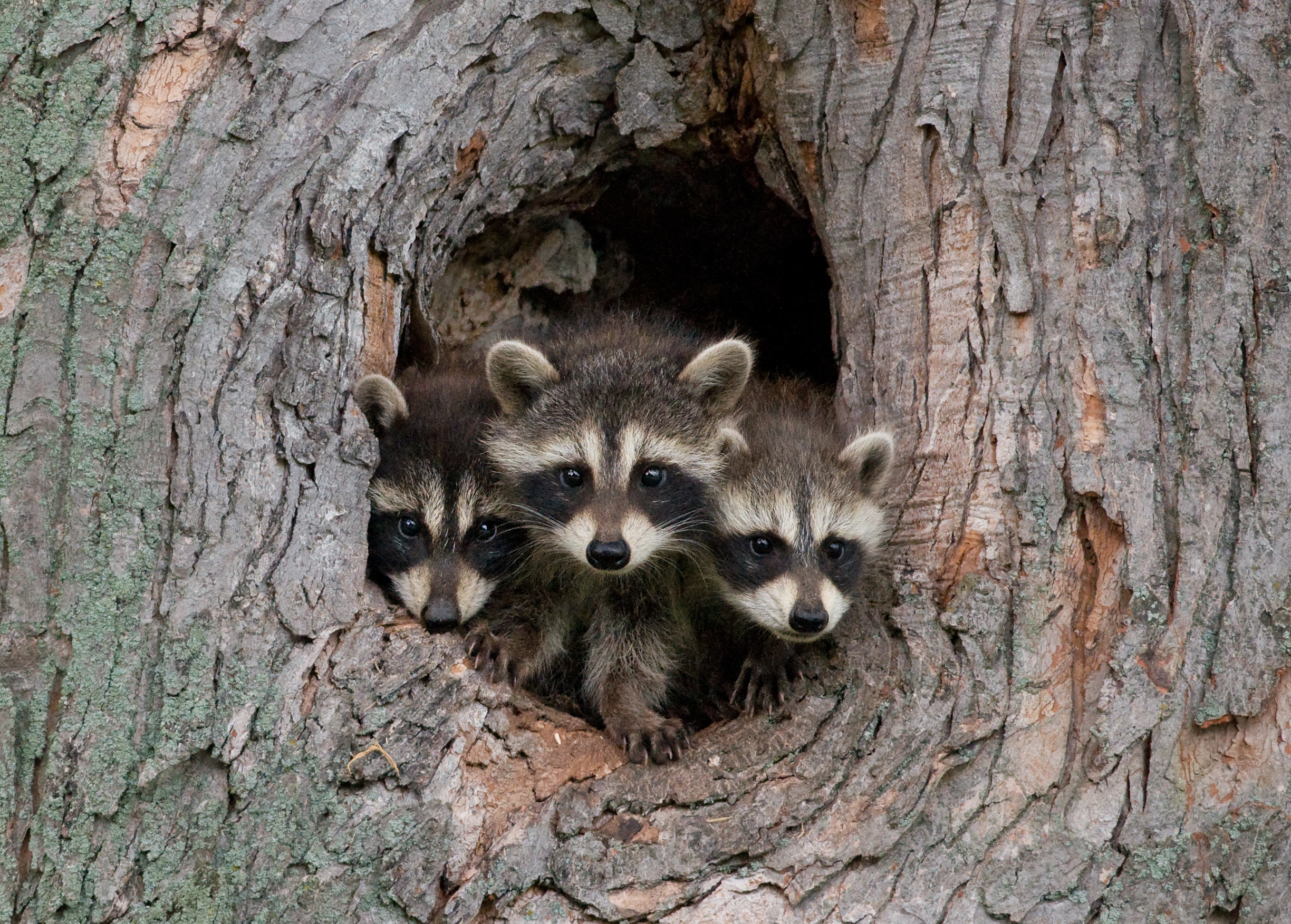
Raccoons are opportunistic animals. They are not wandering into your attic or chimney by accident – they are actively seeking out safe, sheltered spaces that offer protection from predators and weather, proximity to food and water, and a secure environment to raise their young.
How do raccoons gain access to your space? Well, they are remarkably capable animals in terms of physical achievements…
- They can climb virtually any exterior surface, including brick, wood siding, downspouts, and trees overhanging the roofline.
- They’re know to use their front paws like hands, manipulating, prying, and pulling at weak points in your home’s exterior.
- They can tear through construction materials including rotted wood, thin metal flashing, crawlspace vents, and roof decking.
- They can displace improperly fitted chimney caps and chase covers – something smaller animals like squirrels and birds cannot do.
In North Carolina, raccoon activity peaks during late winter and early spring, coinciding with the breeding season and the period when pregnant females are actively seeking den sites.
What Are Signs of Raccoons in My Home?
Raccoons are significantly larger than squirrels or most other common attic wildlife, which means the sounds and evidence they leave behind tend to be proportionally more noticeable. Most homeowners are alerted to the problem within days of a raccoon establishing itself – the challenge is taking the right action quickly before damage compounds.
Common signs of a raccoon intrusion include:
- Heavy thumping, walking, or rolling sounds in the attic or ceiling. Raccoons move with a deliberate, weighty gait that is distinctly different from the quick scurrying of squirrels.
- Vocalizations, including chattering, chirping, or crying sounds. This is particularly true if a mother is present with young kits, whose high-pitched cries can be surprisingly loud.
- Visible damage to the exterior of the home. This includes torn soffit panels, displaced or bent flashing around the chimney, damaged roof vents, ripped screening on crawlspace vents, or chewed fascia boards near the roofline.
- Large, dark droppings. These normally show up in the attic, around the chimney base, or near crawlspace vents. Raccoon feces are significantly larger than those of squirrels or rats and are a key identification indicator.
- Matted or displaced attic insulation. You’ll typically find this relocated where the animal is moving, nesting, or using a latrine area.
- Strong, persistent odors. Raccoons establish dedicated latrine sites and return to them repeatedly, leading to significant urine and fecal accumulation that produces a powerful ammonia-like smell.
- Tracks on dusty surfaces. You’ll normally see these in the attic, on the chimney crown, or around entry points – and raccoon tracks are distinctive, with five elongated fingers resembling small human handprints.
- Visual confirmation. Raccoons are bold animals and are frequently seen on rooftops at dusk, near chimney openings, or around the base of the home near crawlspace entries.
Are Raccoons Dangerous to My Home?
Frankly, yes. They look cute and cuddly, but the scope of damage raccoons are capable of inflicting in a short period of time can’t be overstated. Pound for pound, raccoons are among the most destructive wildlife species that commonly enter residential structures. A single raccoon with a litter of kits can cause damage that costs tens of thousands of dollars to address.
How so? Raccoons are powerful animals. They routinely tear away soffit panels, pry up roof decking, rip out vent screens, and displace flashing around chimneys and plumbing stacks. They also, similar to squirrels, love to chew – and damaged or exposed wiring from raccoon activity is a genuine fire hazard that should be evaluated by a licensed electrician following any confirmed infestation.
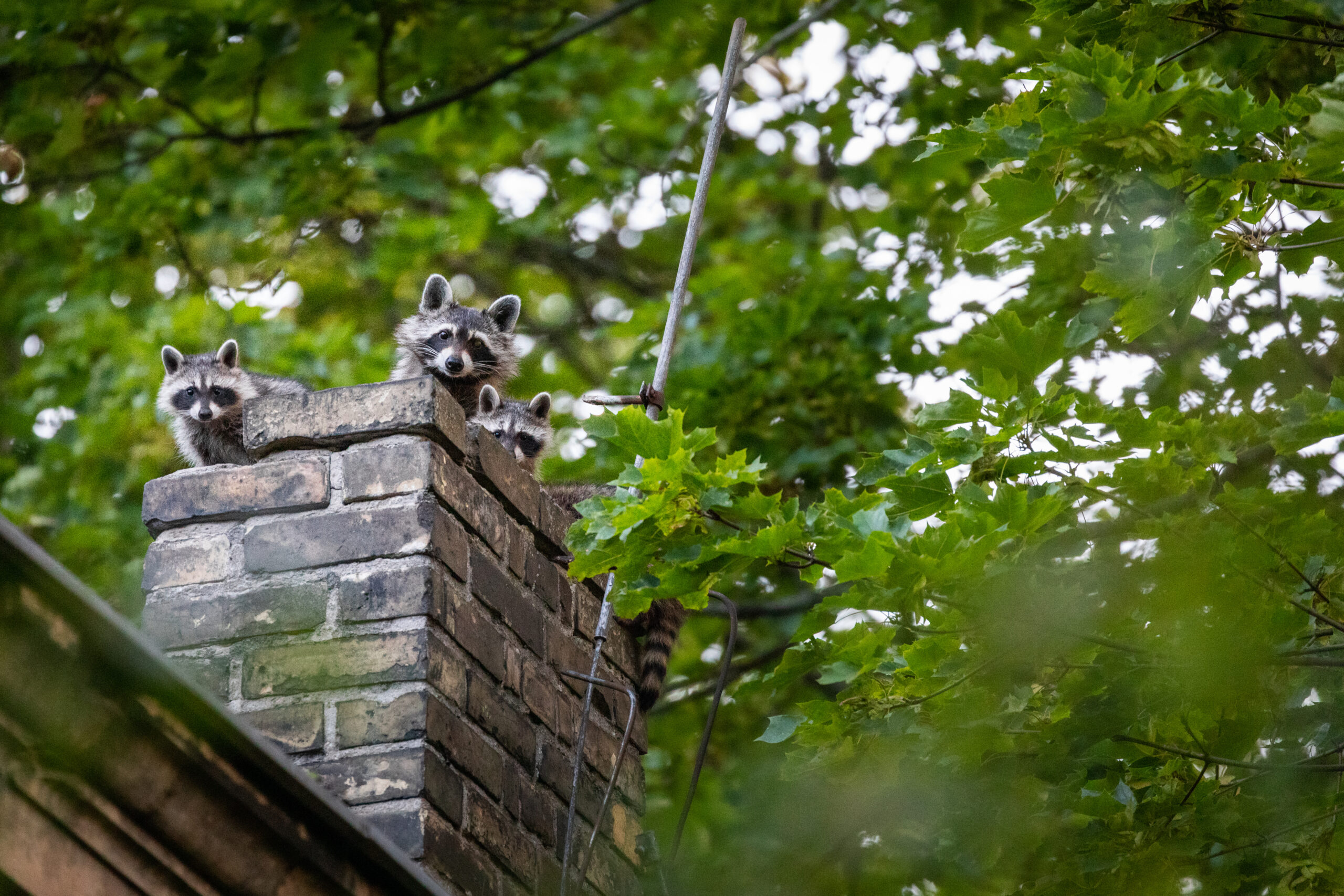
When it comes to chimneys, female raccoons specifically seek out chimneys as den sites – the warm, dark, enclosed environment of a chimney flue closely resembles the hollow tree cavities they naturally prefer. Once inside, a raccoon can build a nest, clogging up the flue and creating some serious contamination issues.
And then there’s the health risks – we’re talking roundworm, leptospirosis, rabies, canine distemper, and more.
Where Are Raccoons Most Commonly Found in a Home?
Raccoons tend to establish themselves in larger, more accessible spaces than smaller wildlife. In our experience across the Triangle and Triad, the three primary locations are:
- Attics: The attic is the most common destination for raccoons entering a home. It provides exactly what a pregnant female raccoon is looking for: a large, protected space with ample nesting material, consistent warmth, and separation from predators and human activity.
- Chimneys: Chimneys deserve special attention in the context of raccoon intrusions because they represent a unique and particularly serious version of the problem. Once inside, a raccoon will typically nest on top of the damper, putting her and her kits directly above your fireplace.
- Crawlspaces: Raccoons will access crawlspaces when the opportunity presents itself, typically through damaged or missing foundation vent screens, deteriorated crawlspace access doors, or gaps around pipes and utility penetrations. Crawlspace raccoon activity is more common in late fall and winter, when animals seek protected spaces for warmth.
Can I Handle a Raccoon in My Home Myself?
We strongly advise against it – more so than with almost any other wildlife species commonly found in homes.
- Physical Risk: Raccoons are large, powerful, and capable of causing serious injury. A cornered or frightened raccoon, particularly a mother protecting her kits, will bite and scratch aggressively. Raccoon bites and scratches carry the risk of rabies exposure, which requires immediate medical attention and a post-exposure prophylaxis protocol.
- Health Risk During Cleanup: Raccoon feces contain Baylisascaris procyonis roundworm eggs that can remain infective in the environment for years. Disturbing or attempting to clean raccoon latrines in an attic or crawlspace without proper respiratory protection and protective clothing is a genuine health hazard, particularly for children.
- Incomplete Removal: Finding and safely removing a litter of kits from within an attic or chimney requires experience and knowledge of raccoon denning behavior. Homeowners who attempt self-removal frequently miss kits hidden within insulation or wall cavities, leading to the kits dying inside the structure and creating a secondary odor and pest problem.
- Entry Point Identification: As with squirrels, sealing entry points before confirming that all animals have been removed will trap them inside – with consequences that are more severe with raccoons than with smaller species, given their size, strength, and determination to escape.
Professional removal is not just the safest option in raccoon situations – in many cases it is the only realistic one.
How Do I Prevent Raccoons From Getting Into My Home?
Prevention is far less expensive and disruptive than remediation. The most effective long-term strategy combines professional exclusion work with ongoing maintenance and a few targeted property management practices.
The most impactful preventive steps include:
- Install a properly fitted, heavy-duty chimney cap. This is the single most important step for chimney-related raccoon prevention. A chimney cap that is correctly sized, constructed of heavy-gauge stainless steel, and securely mounted will prevent raccoon entry through the flue.
- Keep tree branches trimmed well back from the roofline. Overhanging branches are the primary highway raccoons use to access rooftops. We recommend maintaining at least 8–10 feet of clearance between branches and the nearest point of the roofline.
- Secure all exterior trash and food sources. Raccoons are motivated by food availability. Unsecured garbage cans, pet food left outdoors, and accessible compost piles all attract raccoons to your property and increase the likelihood of an intrusion attempt.
- Inspect and maintain soffit and fascia annually. Deteriorating soffit panels are the most common raccoon entry point into attic spaces. Keeping these materials in good repair removes the easiest point of attack.
- Address crawlspace vent screens promptly. Damaged or missing crawlspace screens are an open invitation. These are inexpensive repairs that eliminate a real vulnerability.
- Schedule annual chimney and exterior inspections. Many of our customers who have dealt with raccoon intrusions schedule regular off-season inspections specifically to confirm that exclusion work is holding and catch new vulnerabilities before they’re exploited.
Work With Us for Raccoon Removal Near You
Raccoon problems do not improve on their own. Every day a raccoon spends inside your attic or chimney is another day of potential damage to your structure, wiring, and insulation – and another day of accumulating waste that creates real health risks for your family. The sooner you call, the simpler and less costly the solution almost always is. Reach out to Mr. Smokestack today and let’s take care of it the right way.
Did you known snake removal is also part of our wildlife exclusion services? We can help with it all.