Snake Removal With Mr. Smokestack in Raleigh, Durham & More
Few wildlife discoveries inside a home produce the immediate, visceral reaction that finding a snake does. Whether it’s a slender rat snake coiled in a crawlspace corner or an unidentified species discovered near the fireplace, most homeowners want the animal gone as quickly as possible…but aren’t sure how to go about it. At Mr. Smokestack, we know that snakes found in chimneys, attics, and crawlspaces are almost always a symptom of a larger structural vulnerability – one that, if left unaddressed, will invite more snakes (and other wildlife) back again and again.
Why Are Snakes Entering My Home?
Snakes do not seek out human homes the way raccoons or squirrels do, which is why it can be shocking to find one nestled in the corner of your basement or in your fireplace’s firebox. And they don’t have the same reasons for entering, either – they aren’t typically looking for warmth, nesting materials, or a protected place to raise young. So, why would they enter?
- Food Sources: The snake species most commonly found inside homes in North Carolina – rat snakes in particular – feed almost exclusively on rodents. If you have a snake in your crawlspace or attic, there is a very high probability that you also have (or recently had) a mouse or rat population that attracted it. Addressing the snake without investigating and resolving the underlying conditions that attracted it is an incomplete solution.
- Seeking Shelter: Snakes are ectothermic, which means that they regulate their body temperature through external sources. As temperatures drop in fall and winter, snakes seek out protected, thermally stable environments for brumation (the reptilian equivalent of hibernation). Crawlspaces, in particular, offer exactly the conditions snakes look for – and in warmer months, snakes may enter crawlspaces and basements for coolness.
- Accidental Entry: Not every snake found inside a home has actively sought it out. Snakes exploring the exterior of a structure in pursuit of prey or shelter may fall into window wells, slide into floor drains, enter through open doors or garage access points, or descend into chimneys from above. In these cases, the snake may be just as disoriented and motivated to leave as the homeowner is to have it gone.
What Are Signs That Snakes Are in My Home?
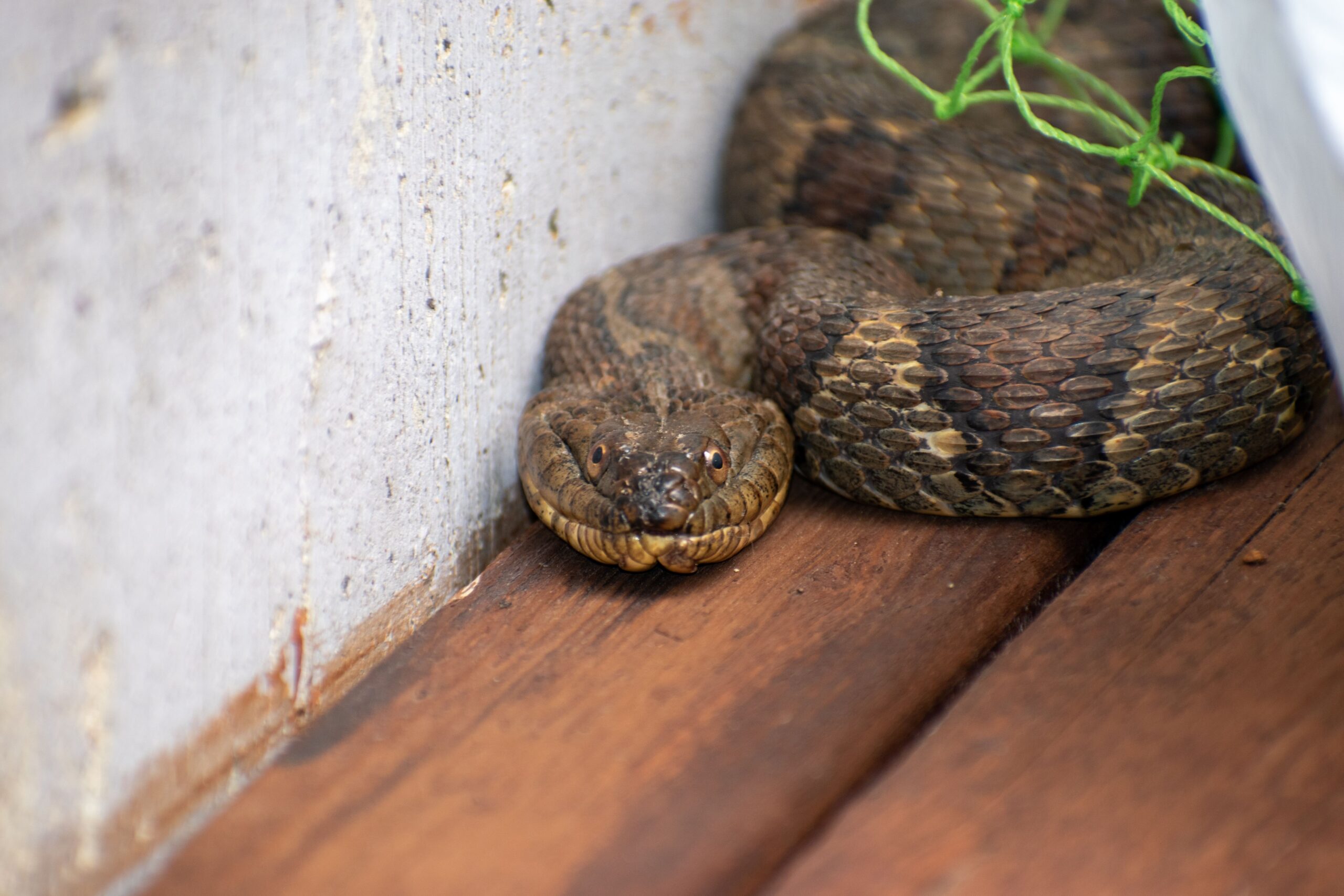
Snakes are secretive, quiet, and extremely good at staying out of sight. Unlike squirrels or raccoons – which are noisy, active, and leave obvious physical evidence – a snake can occupy a crawlspace for an extended period without a homeowner knowing. Discovery is often accidental.
Signs that snakes may be present in or around your home:
- Visual confirmation. This is the most common discovery method… Snakes may be seen crossing a floor, coiled in a corner, or encountered on the exterior near foundation vents or entry points.
- Shed skins. Snakes shed their skin several times per year, so finding a shed skin in the crawlspace, attic, or along a wall is a reliable indicator of snake presence – even if the animal itself isn’t visible.
- Snake droppings. Though less distinctive than mammal droppings, these may be present near areas of regular activity and often appear as elongated, dark matter with white uric acid deposits – similar to bird droppings.
- A rodent problem that suddenly seems to resolve. While this sounds counterintuitive, homeowners sometimes notice a decrease in mouse or rat activity that coincides with an undiscovered snake taking up residence.
- Unusual pet behavior. Dogs and cats will frequently detect snake presence before humans do – watch for unusual alertness, barking, or pawing near walls, vents, or floor-level openings.
- An unusual musky odor. Some snake species, particularly when stressed or threatened, release a musky secretion from glands near the tail, so this odor in a crawlspace or enclosed area can suggest snake activity.

What Are the Legal Protections for Snakes in North Carolina?
This surprises many homeowners, but it is critical information that every North Carolina resident should know before taking any action involving a snake.
Under North Carolina General Statutes (NCGS § 113-294), all non-venomous snakes in North Carolina are protected by state law. It is illegal to:
- Kill, harm, or harass any non-venomous snake in North Carolina
- Collect, possess, or transport protected snakes without appropriate permits
- Sell or purchase protected snake species
This is not a minor regulatory footnote. North Carolina law takes non-venomous snake protection seriously, and violations can result in meaningful fines and penalties. With 31 of North Carolina’s 37 snake species classified as non-venomous, this protection applies to the overwhelming majority of snakes a homeowner is likely to encounter.
What about venomous snakes? North Carolina law does permit the killing of venomous snakes when they present a genuine threat to human safety, but this provision exists for situations involving immediate danger – not as blanket permission to kill any venomous snake encountered. Several venomous species in North Carolina, including the timber rattlesnake and eastern diamondback rattlesnake, are also listed as Species of Special Concern under state wildlife regulations, adding another layer of protection.
The practical implication for homeowners:
- Do not attempt to kill a snake found in your home or crawlspace – in most cases it is illegal to do so, and attempting to kill or capture a snake is also the most common cause of snake bites.
- Contact a professional for identification and humane removal.
- If a venomous snake is posing an immediate safety threat, contact your local animal control or wildlife agency for guidance.
Are Snakes Dangerous to My Home or Family?
The honest answer is: it depends entirely on the species – accurate species identification is the most critical first step in any snake situation.
North Carolina is home to 37 species of snakes, of which six are venomous. The remaining 31 species are non-venomous, and the vast majority of snakes found inside homes fall into the non-venomous category.
Venomous Snake Species in Central North Carolina
- Copperhead: By far the most commonly encountered venomous snake in our region and the one most frequently found in residential settings, copperheads are heavy-bodied, beautifully patterned snakes with the distinctive hourglass crossband markings that make them identifiable to most North Carolinians.
- Cottonmouth/Water Moccasin: More common in the eastern part of the state and in areas near water, these are less likely to be found inside residential structures – but a serious concern near properties adjacent to ponds, streams, and wetland areas. Cottonmouths are notably more aggressive in temperament than copperheads.
- Timber Rattlesnake: Present across much of North Carolina, including parts of the Piedmont region, timber rattlesnakes are large, powerful snakes with potent venom. They tend to occupy forested, rocky habitat and are less likely to be found in suburban settings, but encounters do occur in wooded residential areas.
- Eastern Diamondback Rattlesnake: Found primarily in the southeastern coastal plain of North Carolina, these are less of a concern in the Triangle and Triad – but worth knowing.
- Pigmy Rattlesnake: A smaller rattlesnake found across much of the state, these ares sometimes encountered in suburban settings, but less commonly than the copperhead.
- Eastern Coral Snake: Rare in central North Carolina and primarily found in the southeastern part of the state, these are highly venomous – but reclusive and rarely encountered.
Non-Venomous Species Commonly Found in Homes
The snakes most frequently discovered inside homes in the Triangle and Triad are almost always non-venomous and include:
- Black Rat Snake/Eastern Rat Snake: Rat snakes are the most common large snake in central North Carolina – and the species most frequently found in crawlspaces, attics, and around structures. They are excellent climbers and rodent hunters, following mice and rats into and through structures. They are entirely non-venomous and genuinely beneficial from a pest control standpoint, though their presence is understandably alarming.
- Corn Snake: A beautifully marked, slender non-venomous snake (that is frequently confused with the copperhead by homeowners), corn snakes are docile, beneficial rodent hunters that may be found in crawlspaces and around foundations.
- Dekay’s Brown Snake: These are small, secretive non-venomous snakes commonly found in gardens and around foundations – and remain harmless and rarely noticed.
- Eastern Kingsnake: A fascinating and genuinely valuable species, kingsnakes are immune to the venom of pit vipers and will actively hunt and consume copperheads and other venomous snakes. Finding a kingsnake on your property is arguably a sign of a healthy local ecosystem.
- Ring-Necked Snake: These are a small, shy non-venomous species commonly found under debris, logs, and in crawlspaces – and are entirely harmless.
The most dangerous aspect of a snake encounter for most homeowners is incorrect species identification leading to an unsafe response. Several non-venomous species are commonly mistaken for venomous ones.
If you are not 100% certain of species identification, treat every snake as potentially venomous until a professional confirms otherwise. Never attempt to handle, capture, or kill a snake you cannot positively identify.
Where Are Snakes Most Commonly Found in a Home?
In our experience inspecting homes across the Triangle and Triad, snakes consistently occupy a predictable set of locations.
- Crawlspaces: The crawlspace is by far the most common location for snake discoveries in residential structures – and for good reason. From a snake’s perspective, the crawlspace is nearly ideal: thermally stable year-round, protected from predators, dark and undisturbed, and often accessible through the same small gaps that mice and rats use as entry points.
- Attics: Attic snake discoveries are less common than crawlspace encounters, but are typically where an Eastern rat snake will be found, due to its climbing ability and its desire for an easy rodent food source. Rat snakes are extraordinary climbers, capable of ascending brick, rough wood, downspouts, and tree trunks with ease.
- Chimneys & Fireplaces: Snakes in chimneys are encountered less frequent, but do happen. Rat snakes exploring the exterior of a home and scaling the chimney exterior may enter through an uncapped or open flue, then find themselves unable unable to exit the way they came in. In addition, gaps between the chimney chase and the surrounding roofline framing can allow a place for snakes to enter.
- Around the Foundation & Exterior: Snakes found regularly on the exterior of the home – near the foundation, around HVAC equipment, or under porch areas – may not have entered the home yet, but are actively exploring entry opportunities.
- Basements & Utility Rooms: In homes with basement access or utility rooms that connect to the crawlspace, snakes occasionally make their way up from below through floor drains, gaps around pipes, or utility access openings. These discoveries are typically accidental from the snake’s perspective.
What Happens After the Snake Is Removed?
Snake removal is the beginning of the solution, not the end. Every confirmed or suspected snake entry point needs to be sealed using materials appropriate to the location and the type of gap involved. For foundation vents, this means properly fitted replacement screens with appropriate mesh sizing. For gaps around pipes and conduits, appropriate sealants and physical barriers are used. For crawlspace access doors, proper weatherstripping and door condition is addressed.
If our inspection identifies evidence of an active or historical rodent presence (typical for the majority of crawlspace snake situations), we will advise you clearly about what we’ve found. Addressing the snake without addressing the rodent population that attracted it is an incomplete solution. We can connect you with appropriate pest management resources for rodent remediation and work in coordination with exclusion efforts.
If the chimney was identified as an entry point or contributing vulnerability, a properly-fitted chimney cap or chase cover installation is included in the solution. This closes off one of the most direct paths from the exterior roofline into the interior of the home for snakes, rodents, and other wildlife simultaneously.
How Do I Prevent Snakes From Getting Into My Home in the Future?
Long-term snake prevention is built on two pillars: eliminating entry points and eliminating the conditions that attract snakes in the first place.
- Seal All Crawlspace Entry Points: Properly fitted foundation vent screens, a tight crawlspace access door, and sealed pipe penetrations dramatically reduce the ability of snakes (and the rodents they follow) to access the space below your home.
- Address Rodent Activity: If mice or rats are present in or around your home, snakes will follow, so rodent exclusion is both a pest management strategy and a snake prevention strategy.
- Install a Properly Fitted Chimney Cap: An uncapped chimney is an open invitation for snakes, birds, squirrels, and raccoons alike, so a quality stainless steel chimney cap installed by a certified professional is one of the most versatile and cost-effective wildlife prevention investments.
- Manage the Property Exterior: Snakes are drawn to areas near the home that provide shelter and prey. Reduce attractants like debris piles, wood stacks, tall grass, bird feeders, and standing water on the exterior of the property.
- Schedule Annual Crawlspace Inspections: For homes in areas with consistent snake pressure – wooded lots, properties near creek or pond areas, homes with historical rodent issues, etc. – an annual professional crawlspace inspection is the most reliable way to catch developing entry point vulnerabilities before they become active intrusion situations.
Ready to Address Your Snake Situation Safely & Permanently?
Whether you’ve found a snake in your crawlspace, noticed shed skins near the foundation, or simply want a professional assessment of your home’s vulnerability before the problem develops, we’re here to help. Reach out to Mr. Smokestack today and let’s take a thorough, honest look at what’s happening – and put a plan in place that keeps snakes where they belong: outside your home, where they’re doing the ecosystem genuine good.
Our wildlife removal services wouldn’t be complete without extensive bat removal options – let us know how we can help.